May in Manhattan!!!

Remembering Prince Philip
A page has turned on the House of Windsor. Prince Philip, the husband of Queen Elizabeth II,
has died at 99 just short of his hundredth birthday.
The long serving consort to the Queen has lived a notable and indeed remarkable, if sometimes controversial life. The Queen (94) described Philip, her husband of 73 years as “my strength and stay all these years.” Philip’s passing at Windsor Castle has “left a huge void in her life.”
Princess Elizabeth married Philip in 1947; on his wedding day, he was made Duke of Edinburgh.
Quite unexpectedly just a few years into marriage, Elizabeth became Queen upon the death
of her father George VI, Britain’s beloved wartime King. Elizabeth and Philip heard the sad news in 1952 while at the Treetops Lodge in Kenya. It was time to stand up and serve.
Later at the time of Elizabeth’s Coronation in June 1953, Philip the “media savvy” prince,
insisted that the splendid Royal ceremonies and pageantry be presented on that new medium called television. It was a step toward modernity and transformation of the institution of the monarchy.
His family roots rested in complicated bouillabaisse of royalty from Greece, Germany and Denmark.
This was a long time ago. President Dwight Eisenhower was in the White House. Winston Churchill was British Prime Minister. The Korean War was still raging. Elvis was yet to be famous.
Coverage of Prince Philip’s passing has generally been fair, but has often swerved into the
editorial weeds by sometimes viewing this man through a contemporary Woke lens. Philip was a scion of a very different generation, an era really, one that served and went through the tumultuous years of WWII, and then lived through the heady but threadbare years after 1945, often known as Austerity Britain.
Prince Philip was in many ways a living figure who bridged the generations from postwar-Britain to the present. His keen interest in science and technology, his initiatives for young people, the Duke of Edinburgh’s awards, has helped more than eight million young people around the Commonwealth achieve their dreams. His role in a myriad of charities underscored his compassion.
His notable quips and sometimes gaffes were typical of his generation but often hurtful.
Again he reflected another era.
Conrad Black, writing in Canada’s National Post opined, “He always had that fine royal combination of self-confidence without pomposity. ”
The mega series on the Royals, the Crown, has brought these figures to life and has done a
good job of it; yet, most people will recall Philip in a less than positive light regarding their bumpy years of marriage during the 1950’s.
The Crown series while blending fact and fiction serves to “demystify” the Royals.
At the same time Philip stressed making the monarch “modern and relevant”. He was clearly a modernizer but at the same time a fellow whose gravitas was proudly rooted in traditions.
His BBC TV obituary recorded the Prince as “a man of strong views and a strong sense of Duty.” One can add he was steadfast in his duties and was loyal to the crown. All wonderful attributes but often echoing another age.
British Prime Minister Boris Johnson stated somberly, “Prince Philip earned the affection of generations here in the United Kingdom, across the Commonwealth and around the world.
…one of the last surviving people in this country to have served in the second world war.”
“It is to Her Majesty, and her family, that our nation’s thoughts must turn today,” the prime minister added.
Lauded throughout the Commonwealth’s 54 nations from Canada to Kenya and India to Malaysia, Philip often visited far flung shores.
Indeed, the “Special Relationship” between the United States and Britain endures as an alliance and partnership.
Philip may have been the dutiful unsung hero. But Britain’s Monarchy is not all smoke, mirrors and mystery but a very tangible cohesive force which binds the country together in spite of politics, fads and the occasional errant Prince. The institution, its history, and its meaning go well beyond pomp and glitter.

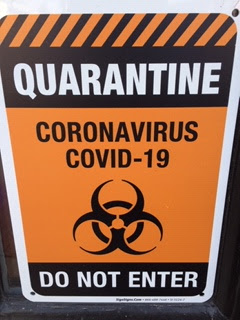
The global pandemic has devastated health standards, the economy, and through stress and the undertow of uncertainty and hardships has affected the sanity of citizens worldwide. Lockdowns, arbitrary regulations, school closings are taking their toll on the social fabric.
Now as a second wave of the Wuhan Covid virus is sweeping Western Europe, and spiking in places as varied is South Africa, India and Brazil, Dr. Hans Kluge, WHO’s Regional Director for Europe warns, “This moment represents a tipping-point in the course of the pandemic, where science, politics, technology and values must form a united front, in or to push back this persistent and elusive virus.” He added, that “more than 230 million people are living in countries under full national lockdown, and more governments are expected to announce lockdowns.”
Last year more than 26 million COVID-19 cases were confirmed throughout Europe. Dr. Kluge added “This is an alarming situation, which means that for a short period of time we need to do more than we have done and to intensify the public health.” Two million people have died worldwide.
Earlier in the crisis people assumed and were told, “Europe got it right in treating and isolating” the virus. Maybe for a while; but since the Autumn countries ranging from France to Spain, Germany and Italy are in the deadly crosshairs of Corona. The United Kingdom faces a particularity lethal “second strain” of the virus which has prompted Prime Minister Boris Johnson to practically shut the country down as the outbreaks surge from London.
Given the lockdown people in England, Scotland and Wales must stay home and only can go out for limited reasons.
Britain’s National Health Service is strained to the breaking point with new hospital admissions.
In France lockdowns have closed cafes and restaurants, and restricted travel. The Macron government has mandated a curfew in major cities to control the outbreaks; the 6 PM to 5 AM curfew has strained nerves and shattered small businesses.
France has seen numbers surge with expanding daily infection rates despite the lockdown.
Portugal, which fared quite well during last year's pandemic surge, now faces a particularly deadly
encounter with Covid. Hospitals in the Lisbon region are filled with Covid patients.
Europe’s grim numbers are worth noting; the United Kingdom has seen 95,000 deaths, Italy 84,000, France 72,000 and Germany 50,000.
Significantly the USA faces a steep fatality rate from Covid; over 400,000 Americans have died in less than a year. Correspondingly the U.S. is facing a relatively mild flu season; largely in part to the COVID-19 safety precautions as well as more than 188 million flu vaccinations. Both flu and Covid deaths, especially among the elderly population, tend to affect people with multiple underlying health conditions.
A Vaccine to the rescue? We have finally have the tool if not silver bullet to stop the Covid spread. America’s much maligned Operation Warp Speed delivered and has fast tracked and helped develop a safe vaccine for the USA. But many state governments and politicians are acting like the proverbial Keystone Cops in directing and misdirecting vaccine distribution. New York state has stumbled with changing regulations and priorities.
But look at the data. Vaccine distribution in Israel, the United Kingdom and the USA, lead the world in the number of vaccine doses administered; as a percent of the population vaccinated, the American rate stands at about three times higher than most other European countries such as Italy and Germany.
The Biden Administration is pushing for a Herculean effort, backed by signing fifteen Executive Orders, to deliver one million shots daily in one hundred days. Will the President’s Pen magically make U.S. Pharma firms produce more vaccine doses to shortly appear in clinics across America ?
Further afield, Iran’s Ayatollahs say no to the Anglo/American vaccines so they are probably looking to China for the jab. Iran’s Supreme Leader Ayatollah Ali Khamenei made unsubstantiated claims that the American and British vaccines were “untrustworthy.” He decreed, “importing vaccines made in the US or the UK is prohibited.” So far 56,000 Iranians have died during the pandemic. Let’s face it, Iran’s clerical elite will probably get a U.S. vaccine!
Islamic Iran has banned imports of the Pfizer-BioNTech, Moderna and AstraZeneca/Oxford vaccines.
In a strange twist, Argentina who should know better, has decided to use the Russian Sputnik vaccine! Argentina became the first country in Latin America to use the Russian shots. But in a bid to get an additional 15 million vaccines, Argentina’s socialist Fernandez government is currently in talks with China to procure the Sinovac vaccine. China’s President Xi Jinping said that his country is “ready to work” with Argentina to boost cooperation.
But the depth of the global crisis goes beyond borders. UN Secretary General Antonio Guterres
warned, “We are at a 1945 moment, but this is not 1945. Today’s war is against a microscopic virus. Tomorrow’s could be against terrorists in cyberspace. “

KING for a Day!

The paper crown can also be worn by the lucky person who discovers the Feve!

Happy Thanksgiving--Time for Beaujolais Nouveau
It's that time of the year when the American Feast of Thanksgiving is celebrated with French Beaujolais Nouveau wine!
The French "new wine"has been a traditional compliment to Thanksgiving Tables and despite the Covid pandemic, this year is really no different.
The 2020 Beaujolais Nouveau comes from the formidable Gamay grape and is a "young" and indeed uncomplicated edition to the harvest meal, usually of Turkey and cranberries.
Despite this being 2020, a year which has been filled with disappointment, chagrin and crisis, the Beaujolais Nouveau is exceptionally good and a fine addition to celebrations hoping for better times.
A Votre Sante!